Marketing Your SaaS on a $0 Budget
Learn how to successfully market your SaaS on a $0 budget in 2026! Effective strategies and tips to grow your SaaS business without spending a dime.

Marketing Your SaaS on a $0 Budget
I was reviewing growth reports last month and noticed a recurring pattern: founders assume a slice of the projected $720.44 billion global SaaS market by 2028 requires an equally massive marketing budget. That's a myth. Many operate on assumptions, not proven organic strategies. Your SaaS doesn't need a six-figure ad spend. It needs smart, targeted effort.
Zero-budget marketing isn't about doing nothing. It’s about leveraging specific channels. Think community engagement, targeted BOFU SEO, and consistent outreach. These methods demand persistence. But they deliver measurable results. We've seen it with countless clients.
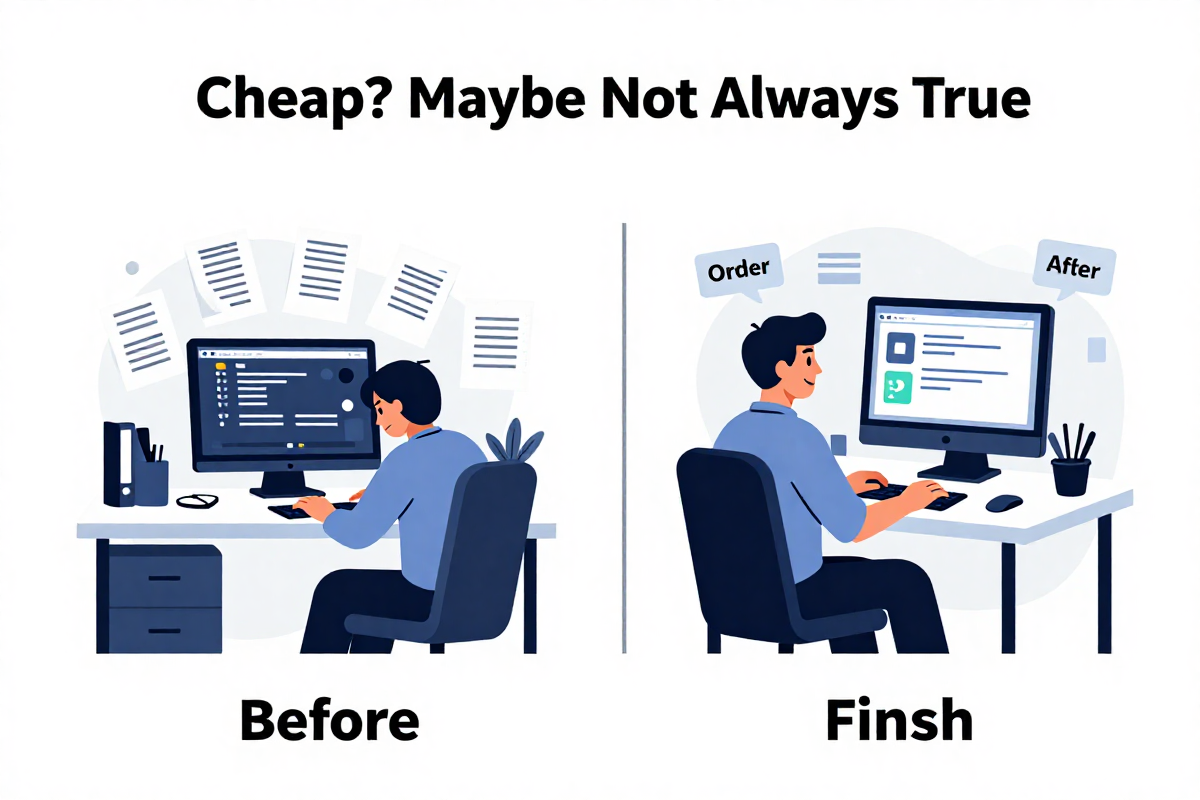
Is zero budget marketing actually free?
No, "zero budget" really means reallocating resources. You're trading capital for time and sweat equity.
Think of it this way: you aren't paying dollars, but you're definitely paying something. It's the hidden cost founders often miss.
The catch? Time is a finite resource. And you probably don't have enough of it. So, where are those hidden costs lurking?
- Tool Limitations: Many "free" tools have usage caps.
- Time Investment: Manual tasks eat hours (which could be spent coding, selling, or sleeping).
- Learning Curves: Mastering new platforms isn't instant. (There will be tutorials. Lots of tutorials).
For instance, Notion offers a free plan, but you'll quickly hit its limitations, like the 5MB file upload cap. So, while technically "free," you might need to upgrade to a paid plan sooner than you think.
Consider cold outreach. To do it right takes hours of research and personalization, so you could target decision makers who need your product. But you can automate all of this by using AI tools so you won't need to spend much time to find target users.
What's the next move? Stop thinking about zero-budget as actually free. Instead, think of it as "capital-efficient." Now, about those SaaS directories... if you decide to list your Saas on directories we can help, check out our guide to choosing a Saas SEO agency that delivers
How to prioritize tasks when resources are limited
Prioritize ruthlessly, because you can't do everything at once. Early-stage SaaS companies often spread themselves too thin across multiple platforms, achieving minimal impact.
The "one channel, one persona" rule is crucial. Focus on mastering one marketing channel before expanding to others. This lets you build momentum and avoid spreading your efforts too thinly.
How do you choose that one channel?
- Identify your ideal customer persona: Who are they, and where do they spend their time online?
- Research relevant marketing channels: Which platforms align with your target audience? (Is it Reddit, Discord, or niche online communities?)
- Focus all effort on that single channel.
Trying to build a presence on TikTok, X, and LinkedIn simultaneously is a recipe for burnout and mediocre results. Instead, go deep on one platform.
This approach allows for rapid testing and iteration. If the chosen channel proves ineffective, switch gears quickly without having wasted significant resources.
If you decide that directories are the channel for you, take a look at our expert guide on the best SaaS directories for growth in 2025.
What's the catch? This strategy demands patience. Results aren't instant. It takes time to build an audience and gain traction on any platform.
Why retention is your cheapest acquisition channel
Customer retention isn't just good manners; it's the ultimate growth hack. Think of it as plugging a leaky bucket. Why keep pouring in new water (customers) if it's all draining out?
Keeping a current customer is allegedly 5x cheaper than acquiring a new one. (Some studies even put it higher). But it's more than just cost savings.
Happy customers morph into a free marketing team. They're walking, talking billboards, singing your praises without you paying a dime. This is where referral loops become your best friend. The formula is simple:
- Exceptional service + engaged user = referral engine.
Word-of-mouth, even in 2026, is still king. Think about the last time you bought something based on a friend's recommendation. Trust is currency. And happy customers are minting it for you.
Churn reduction becomes the name of the game. Document your processes and create playbooks for customer success. But don't get caught up in the weeds. Check out our guide to SaaS directory submissions to help you reduce your time and effort on marketing. The goal is to make customers feel valued and heard. Because feeling ignored? That's a one-way ticket to cancellation.
What's the catch? Building these referral loops takes time. You have to earn that trust.
How to find customers in online communities
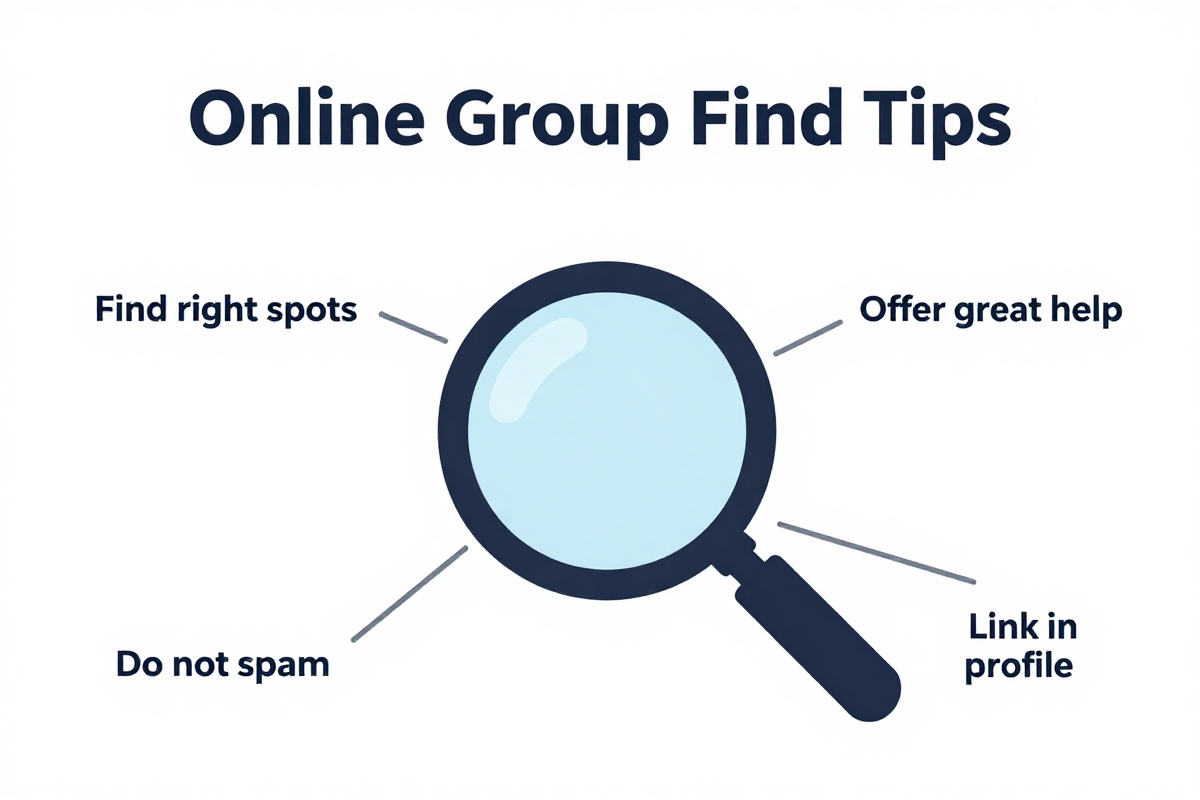
"Community hacking" is about becoming a valuable member, not a spammer. Think of it as being a helpful neighbor instead of a door-to-door salesperson.
The goal? To engage potential users without being banned. It's a delicate dance. The core strategy hinges on providing value first, promotion second (or not at all, initially).
Here's how to pull it off across platforms:
- Reddit: Join relevant subreddits (e.g., r/SaaS, r/startups). Answer questions genuinely. Offer helpful advice. Subtly mention your SaaS only when relevant, and only if it directly addresses the user's problem. Avoid blatant self-promotion at all costs. It's a surefire way to get banned.
- Discord: Find servers related to your niche. Participate in conversations. Offer assistance. Share your expertise. Again, only mention your SaaS if it genuinely solves someone's issue.
- LinkedIn: Engage in industry groups. Share valuable content. Comment thoughtfully on others' posts. Build relationships. And subtly hint at your product in your profile, mentioning how it helps solve a specific problem.
The common thread? Value. Provide it consistently. Earn trust. The sales will follow. (Maybe).
The bigger issue is where to focus your time. Organic growth strategies centered around community engagement and BOFU SEO have proven successful for early-stage SaaS companies. Reddit, Discord, and LinkedIn can be an incredible source to find users. But you need to provide value, before expecting a sale, and this is not always what happens.
What's the catch? This strategy takes time and effort. You have to actively participate in these communities. You can't just drop a link and run.
Now, what if you want to get your SaaS listed on directories to attract more traffic? Take a look at our list of the best free SaaS directories for SEO visibility in 2025.
Next step? Identify which online communities are the most relevant to your target audience. Then, start engaging.
The profile bio trick for subtle promotion
The key is optimizing your profile so that when you drop knowledge, people want to know more. It's passive lead generation at its finest.
Think of your profile as a 24/7 landing page. Someone reads your insightful comment on Reddit, clicks your name, and bam – they're on your profile. Now what? If it's a generic, uninspired bio, they're gone.
But, a well-crafted bio acts as a subtle, always-on sales pitch.
Here's how to make it work:
- Clarity is king: Ditch the buzzwords. State exactly what problem your SaaS solves.
- Quantify the benefit: Instead of "We help SaaS companies grow," try "We help SaaS companies get listed on right directories and increase web traffic 2X ."
- Include a call to action: Don't be shy. Point them towards a relevant landing page. (e.g., "Try our free SaaS directory analysis tool.")
This isn't about hard-selling. It’s about piquing curiosity.
A user finds your answer helpful, then they click on the link and they are on a page, reading about how our SaaS SEO directory can help their company grow.
The bigger issue is consistency. Update your bio regularly. Keep it fresh. This small tweak can turn every comment into a potential lead. Organic growth strategies centered around community engagement and BOFU SEO have proven successful for early-stage SaaS companies. As you provide more answers and value, people will visit your profile often.
Next step? Audit your current social media profiles. Are they optimized to convert curious clicks into qualified leads?
High intent SEO strategies for bootstrapped founders
BOFU SEO targets users actively seeking solutions like yours. It's about capturing the $720.44 billion global SaaS market, verifiable from SkyQuest Technology's 2022 report, by attracting organic search traffic.
But how do you actually do it? Focus on high-intent keywords.
Think phrases like "[Your Niche] alternative" or "How to [solve X pain] with software." These users are primed to buy. (Or at least, try a demo).
One foundational (and often overlooked) strategy is SaaS directory submissions.
These submissions aren't just about backlinks; they're about visibility where your target users are already searching. They are a great starting point to increasing your visibility on the internet. And, done right, it's a very good starting point to improving your domain authority.
Plus, many directories offer free listings, aligning perfectly with a zero-budget approach. But do not rely solely on directory submissions, think of them as another tool in your toolbelt! For more information, review our guide to choosing a SaaS SEO agency that delivers.
The catch? Directory submissions can be time-consuming if done manually. This is exactly the reason why we created our tool, to help save you time from finding directories to submitting. We want you to focus on building your product!
Next step? Start compiling a list of relevant directories in your niche and determine which ones offer the highest potential for reaching your ideal customers.
Creating Alternative To pages that convert
Creating "Alternative To" pages snags traffic from users ready to switch, offering high conversion potential. Users searching for alternatives are further down the sales funnel and are often not happy with their current solution.
These pages directly address the pain points of users looking to replace a competitor's product. But simply listing features isn’t enough.
- Highlight key differences: Focus on aspects where you outperform the competitor. (Maybe it's pricing, ease of use, or specific integrations).
- Address limitations: Acknowledge where your product isn't a fit. Honesty builds trust.
- Show, don't just tell: Use screenshots, demos, and user testimonials to illustrate your product's value.
The catch? Competitor comparison requires deep research. A shallow "vs" page will backfire. You must understand your competitor's strengths and weaknesses as well as your own. Users will quickly spot inaccuracies or biased comparisons. This is one area where AI writing tools often stumble.
Consider Ahrefs, a well-known SEO platform. But its complex pricing structure isn't for everyone. An "Ahrefs alternative" page could highlight simpler, more affordable solutions.
Next step? Identify your top competitors. Then, analyze their product offerings, pricing, and customer reviews. What are people complaining about? Where do they feel underserved? Then, create content to attract the right user with the best alternative solution to their current product.
Using free directories for early visibility
Founders need to be where their potential customers are looking. SaaS directories offer a concentrated pool of early adopters actively searching for new tools. This isn't just about backlinks. It's about tapping into a targeted audience already primed to try new software.
The problem? Manual submission takes ages. Each directory requires a unique profile, tailored descriptions, and careful categorization. This sucks up valuable time that could be spent, well, building your product.
That's where automation steps in. Our tool, LaunchDirectories, streamlines the process by automating profile creation and submission across multiple directories. Saving founders time and getting their product listed in front of the right people.
Of course, many directories are outdated or irrelevant. So, do your homework. Start by exploring a list of the top free SaaS directories for SEO visibility to determine the best fit for your product and market.
Remember, visibility is key. Make it as easy as possible for your target audience to find you.
Cold outreach that gets replies without a budget
Cold outreach still works if you personalize it and offer value. But blasting generic emails to a purchased list? Expect a swift trip to the spam folder.
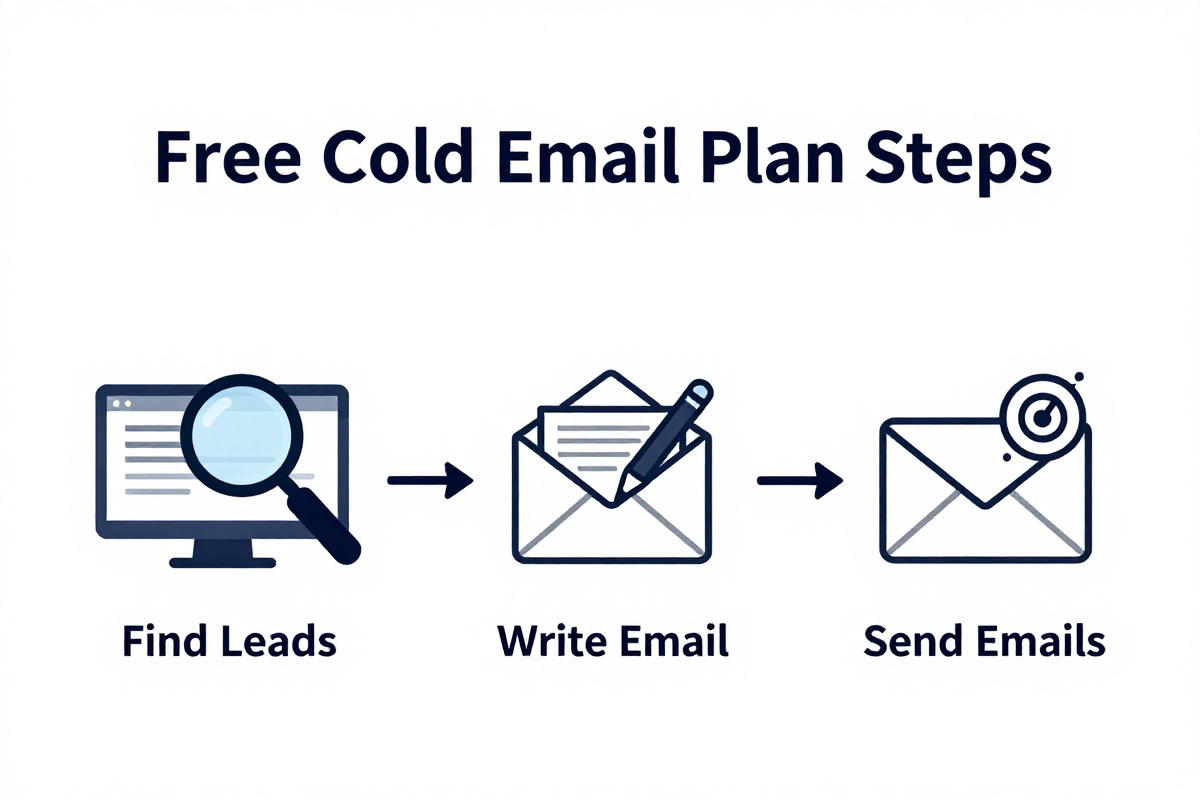
The key is finding targeted B2B SaaS leads without shelling out for expensive databases. And it’s doable. Here’s how:
- Google Search Operators: Use advanced search queries to pinpoint your ideal prospects (e.g., "intitle:[job title] AND [industry] AND 'using [competitor's tool]'").
- Social Media Sleuthing: LinkedIn Sales Navigator has a price tag, but basic LinkedIn search is free. Filter by industry, company size, and job title to build a list of relevant contacts.
This isn't about quantity; it's about quality. Personalize each message to resonate with the recipient's specific pain points.
Mention a recent blog post they wrote, or a problem their company is facing. Show them you've done your homework.
Cold outreach, when personalized and value-driven, remains an effective marketing strategy for B2B SaaS and you won't even have to break the bank.
And if directories are your game, use our guide to understand the best SaaS directories for 2025 growth.
The catch? This takes time, since personalization at scale is not easy. Avoid generic templates at all costs.
Writing templates that don't sound like AI
Writing cold emails that don't sound like AI boils down to mastering the art of human connection. Forget the formulaic introductions.
Instead, structure your outreach around these three pillars:
- A genuine compliment (research their work).
- A specific pain point (demonstrate you understand their challenges).
- A low-friction ask (make it easy for them to say "yes").
It's about value, not volume.
Ditch the generic praise. "I enjoyed your recent post" is noise. But "I appreciated your breakdown of SaaS metrics in your article on Forbes, particularly the section on churn rate" shows you’ve actually read their content. Then, connect that compliment to a specific pain point. "I noticed you mentioned struggling with [specific challenge]. Many SaaS companies face the same hurdle, but the data shows community hacks can help." Now you have their attention.
Finally, make the "ask" ridiculously easy. Don't pitch a demo right away. Offer a free resource, ask for feedback, or suggest a quick chat. Something like, "Would you be open to a quick 10-minute chat to discuss community marketing? Or, if you're interested, here's a free SaaS directory analysis tool." Low commitment, high value. You can then point them towards our tool. Because getting them to see our tool will help them find what they need.
This approach might not generate a flood of leads overnight, but it will earn you trust. And trust leads to conversions.
Leveraging free AI tools for content creation
AI can be a content lifeline, but it’s not magic. The free tiers of Large Language Models (LLMs) are surprisingly potent for bootstrapping content creation, offering tangible value if you know how to wrangle them.
Here's how to make the most of them:
- Brainstorming: Dump your vague idea into ChatGPT 3.5 and ask it to generate 10 title variations. Don't just take the first result; iterate.
- Drafting: Use the AI to create a first draft. But do not expect perfection. You will need to rewrite it.
- Repurposing: Ask Bard to rewrite a blog post into a Twitter thread, focusing on key takeaways. Don’t just copy-paste; rewrite it.
But the biggest issue is that all content sounds the same now. Everyone is using the same AI prompts. You need to start experimenting and getting creative.
This fails because most founders treat AI like a magic wand, not a tool. The real work is in the editing and refining and giving a personal touch, that will set your brand apart from competitors.
Don't skip the crucial step of fact-checking. LLMs are notorious for "hallucinating" information. And if you are looking to promote your content, a helpful way to do this is using a Saas SEO agency that delivers.
Next step? Start experimenting with different prompts and AI tools to find the combination that works best for your content needs.
How to track results without premium analytics
You don't need to spend a fortune on analytics to see what's working. Google Search Console (GSC) and basic UTM tracking are sufficient. The key is knowing what metrics matter before you start.
GSC provides organic search data (for free). It shows you which keywords are driving traffic, your average ranking position, and click-through rates. Use this to identify content gaps and optimize existing pages. (By the way, filter your GSC data by country to avoid misinterpreting global trends).
UTM (Urchin Tracking Module) parameters are tags you add to URLs to track traffic sources in Google Analytics. Here’s the breakdown:
- utm_source: Identifies the source of the traffic (e.g., "twitter," "linkedin").
- utm_medium: Identifies the marketing medium (e.g., "social," "email").
- utm_campaign: Identifies a specific marketing campaign (e.g., "summer_sale," "content_launch").
These parameters can get messy. Use a URL builder (like Google's Campaign URL Builder) to maintain consistency.
The bigger issue is knowing what to track. That's where "North Star metrics" come in. A North Star metric is the single metric that best represents the core value you deliver to customers.
For zero-budget marketing, think beyond vanity metrics like "likes" or "followers." Instead, focus on metrics that indicate sustainable growth:
- Qualified leads generated per month: How many leads are coming from each channel?
- Conversion rate from lead to trial: What percentage of leads convert into trial users?
- Customer lifetime value (CLTV): How much revenue does each customer generate over their lifetime?
These metrics reveal which channels are actually driving revenue. Ignore everything else.
Don't just collect the data. Analyze it. Look for patterns. What blog posts are generating the most leads? Which social media platforms are driving the highest-quality traffic? Double down on what's working.
Next step? Set up UTM tracking for all your marketing campaigns. Then, start monitoring your Google Search Console data. What is working and what is not working?
Quick checks that bootstrapped founders skip
Those "little" tasks? They’re often the make-or-break for bootstrapped SaaS founders. Think of them as the unglamorous foundation that supports everything else.
Here’s a quick checklist of often-skipped, free wins:
- Optimize page speed. Every second counts. Google penalizes slow-loading sites. Use Google's PageSpeed Insights to identify bottlenecks.
- Set up a proper 'About Us' page. This builds E-E-A-T (Experience, Expertise, Authoritativeness, and Trustworthiness). Don't just list your team; tell your story. Why did you build this SaaS? What problem are you solving?
- Claim social handles, everywhere. Even if you don’t plan to use every platform, secure your brand name. This prevents competitors from impersonating you or diluting your brand. Use a tool like Namecheckr to check availability across different platforms.
The bigger issue? Founders get tunnel vision. They focus on product development while neglecting these foundational elements. This is a missed opportunity to earn trust and rank faster without spending a dime. You need to create brand consistency, so that users will be able to find you more easily.
What's next? Start auditing your site and social presence. Are you checking these boxes?
What results look like in the first 90 days
Set realistic expectations right away: organic growth is a marathon, not a sprint. Don't expect overnight miracles.
Most founders give up just before the compounding effect kicks in. The initial 90 days are about planting seeds and establishing a foundation. And the timeline matters.
What can you realistically expect?
- Increased Organic Traffic: Expect to see a gradual uptick in organic traffic, particularly from BOFU (Bottom of Funnel) keywords. (This assumes you've optimized your site and are consistently creating valuable content.)
- Improved Keyword Rankings: Track your keyword rankings using Google Search Console. Monitor for improvements in average position. Don't obsess over #1 rankings. Focus on steady progress.
- Community Engagement: Look for increased engagement in relevant online communities. Are people asking about your product? Are they sharing your content?
- Referral Traffic: Monitor referral traffic from SaaS directories and other relevant websites. And double-check that your UTM parameters are set up correctly.
- Lead Generation: Track the number of qualified leads generated from each marketing channel. Which channels are driving the highest-quality leads?
Remember, patience is key. These strategies take time to gain traction. The real payoff comes months down the line, as your efforts compound and your online presence expands. Now, if you want to know which directories to post on, check out our guide to the best free Saas directories for SEO visibility in 2025.
But don't just sit back and wait. Continuously monitor your results. Refine your strategies. And adapt to the changing landscape. Organic growth is a journey, not a destination.
What's the next move? Set up your tracking and monitoring systems. Then, commit to consistent execution.